Custom Orthotics Assessment and Fitting in London, Ontario
Why it matters
Custom orthotics only work well if the assessment is accurate. A device that looks right on paper can still cause knee, hip, or lower back strain if the foot mechanics were missed. In London, Ontario, a proper fitting process helps catch those issues before they turn into daily pain. A custom orthotics clinic like Complete Foot Care Clinic has the tools required to provide a precise measurement and assessment of your orthotic needs.
Biomechanical gait analysis for custom orthotics
Gait analysis shows how your body moves from heel strike to toe-off. That matters because pain is often caused by motion patterns, not just foot shape.
A clinician will look at stride timing, ankle motion, arch control, and how weight shifts across each step. A common mistake is focusing only on where the pain is. The real problem may start higher or lower in the movement chain.
If gait mechanics are read incorrectly, the orthotic can push the foot in the wrong direction. That can leave you with more pressure under the forefoot, calf tightness, or poor balance during longer walks.
Foot posture assessment and pressure mapping
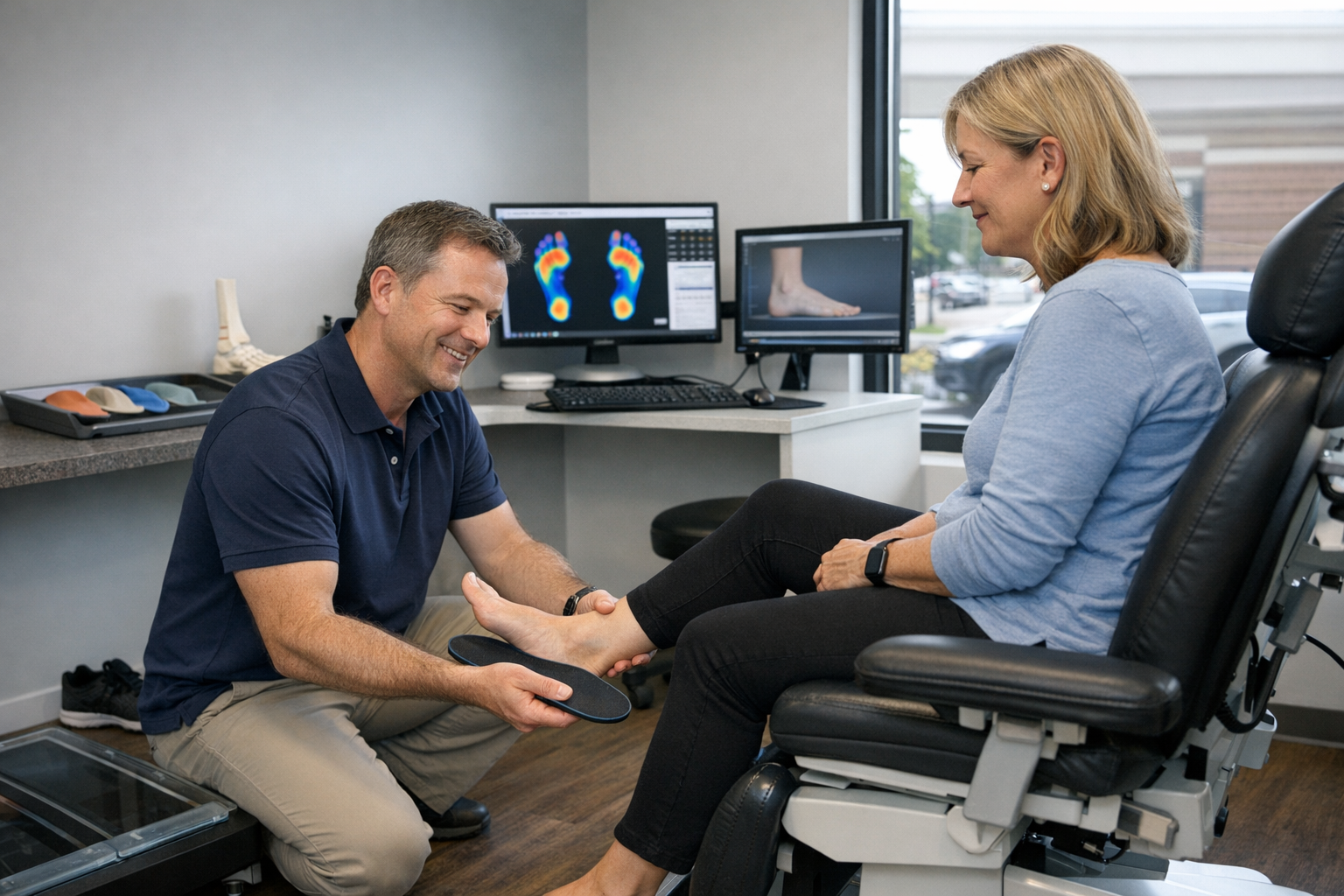
Static foot posture gives one part of the picture. Pressure mapping adds the missing detail by showing where force builds up during standing and walking.
This helps identify problems such as overloaded heels, collapsed arches, or uneven pressure between the left and right foot. One tradeoff is that pressure data is useful only if it is matched with a physical exam. A pressure image alone does not explain why the load is happening.
- Flat loading patterns can point to poor arch control
- High forefoot pressure may explain burning or numbness
- Side-to-side imbalance can affect knee and hip tracking
Missing these details can lead to an insert that feels supportive at first, but fails during daily use.
3D scanning and casting methods
Modern clinics may use digital scans, foam boxes, plaster casting, or a mix of methods. The goal is the same, capture the foot in a position that reflects how it should function inside the shoe.
Each method has limits. A fast scan is convenient, but it still depends on foot position during capture. If the foot is held poorly, the model can be precise and still be wrong. That is why the orthotics assessment process matters as much as the scan itself.
Material choice also matters after the model is made. A rigid device may control motion better, but it can feel harsh in a tighter shoe. A softer device may improve comfort, but it may not control alignment enough for higher-demand activity.
Custom orthotics fitting appointments in London, Ontario
The fitting appointment is where the device meets the real conditions of your shoes, foot shape, and walking pattern. In London, Ontario, this step should include checking heel fit, arch contact, shoe volume, and how the orthotic sits under load.
A common failure happens when a well-made orthotic is placed in the wrong footwear. If the shoe is too shallow or too flexible, the device may shift, crowd the toes, or change how the heel sits. That can create rubbing and make the orthotic feel unstable.
Most custom orthotics need some adjustment after the first wear period. That does not mean the device failed. It means real-world use has revealed pressure points, shoe conflicts, or alignment changes that were not obvious in the clinic.
Follow-up adjustments for comfort and alignment
During a first orthotics appointment, small fitting details often decide whether the device works in daily life or gets left in a closet.
Typical adjustments include trimming the length, changing arch height, adding heel posting, or softening high-pressure areas. The risk of skipping follow-up is simple, minor discomfort can turn into poor compliance, and then the original gait problem remains untreated.
If an orthotic feels too aggressive, too loose, or uneven after a break-in period, the next step is reassessment, not guesswork.