Choosing a Custom Orthotics Provider in London, Ontario
Why it matters
The right orthotics provider does more than hand you an insert. They assess how you walk, identify the source of pain, and build a treatment plan that fits your body. A poor assessment can lead to wasted money, ongoing discomfort, and a device that never addresses the real problem.
Credentials and clinical experience to look for
Start with the provider’s training and scope of practice. You want someone qualified to assess gait, foot mechanics, and related joint issues, not just someone selling a product.
Experience matters because foot pain is not always a simple arch issue. Heel pain, knee strain, and forefoot pressure can come from different movement patterns, and a provider with limited clinical background may miss that distinction.
Look for a clinic that can explain who performs the assessment and how orthotics are prescribed. If the answer is vague, that is a warning sign. The risk is getting a device shaped to your foot, but not designed for how you actually move.
Custom orthotics versus over-the-counter insoles
Over-the-counter insoles can help with mild discomfort or short-term support. They are quicker to buy and cost less upfront, but they are not built around your gait, pressure points, or structural needs.
Custom orthotics are designed from an assessment, not a shelf template. That difference matters if you have recurring pain, uneven wear patterns, a history of injury, or symptoms that travel up into the ankles, knees, hips, or lower back.
The tradeoff is cost and time. A true custom device usually requires assessment, fitting, and follow-up. In London, Ontario, that extra step is often what separates a useful device from one that feels supportive at first, then creates new pressure or rubbing after a week of wear.
On-site assessment technology and diagnostic tools
A strong provider should be able to show how they assess function, not just foot shape. Static measurements alone rarely tell the full story, because many problems appear only during walking or standing under load.
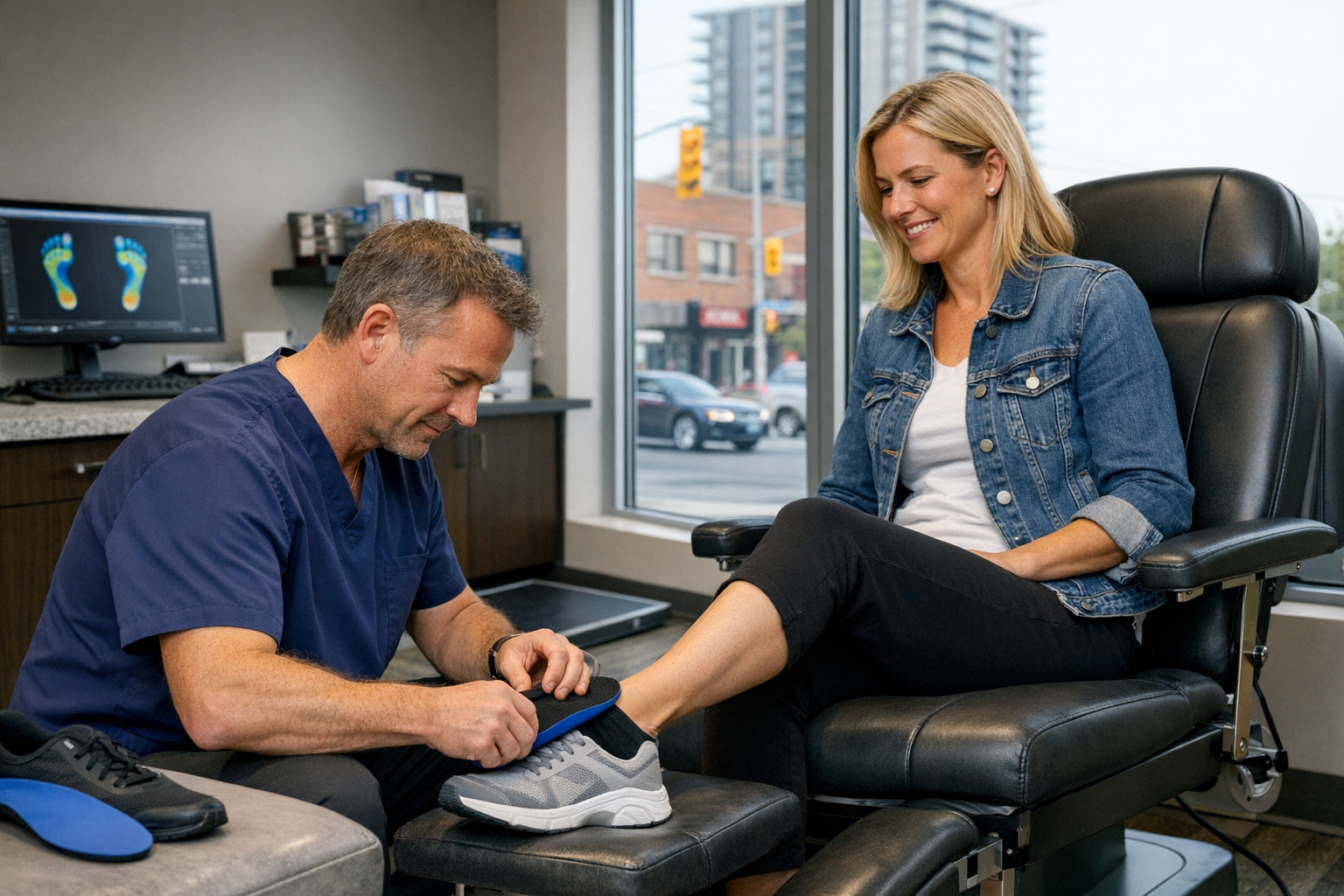
Useful tools and foot assessments may include gait analysis, pressure mapping, range-of-motion testing, and footwear assessment. These help reveal common failure points, such as overpronation, poor pressure distribution, or a mismatch between the orthotic and the shoes you actually wear.
Even well-made orthotics often need minor adjustments. Small changes in posting, cushioning, or arch contour can make a big difference once the device is used in real shoes over several days.
Adjustment policies and aftercare support
Some patients compare clinics by reading a local discussion thread, but the better test is still asking the clinic to explain its assessment process in plain language. If they cannot show how they gather data, the orthotic design may rely too much on guesswork.
Ask what happens if the first version feels too aggressive or causes new pressure. A clinic without a clear adjustment policy may leave you stuck with an expensive device that is technically custom, but not wearable.
Good aftercare usually includes follow-up visits, a break-in plan, and guidance on shoe compatibility. That matters because an orthotic can fail simply because it does not fit the footwear you use most often.
Questions to ask before starting treatment
The best questions help you judge process, not sales language. You are trying to confirm how the clinic thinks through diagnosis, design, and follow-up.
- Who performs the assessment, and what credentials do they have?
- What tests are used before the orthotic is prescribed?
- How are adjustments handled if the fit or comfort is off?
You should also ask how success is measured. If the answer focuses only on making the insert, not improving symptoms or function, that provider may be treating the product as the goal instead of your outcome.
How to make the final choice
Pick the provider who can clearly explain diagnosis, device design, and follow-up. A polished sales pitch matters less than a careful assessment and a realistic plan for adjustments.
If a clinic in London cannot explain why a custom device is appropriate for your symptoms, keep looking. The right provider should make the process clear before treatment starts.